The Genesis: A Sentence as Seed
The journey begins with language—sharp, paradoxical, poetic. A line that carries both pride and premonition:
The man who clung most tightly to imperial pride may have been its undertaker without knowing it.
This text becomes the anchor—the haunting hum beneath all that follows. It is not interpreted, but absorbed, metabolized, and exhaled in material form.
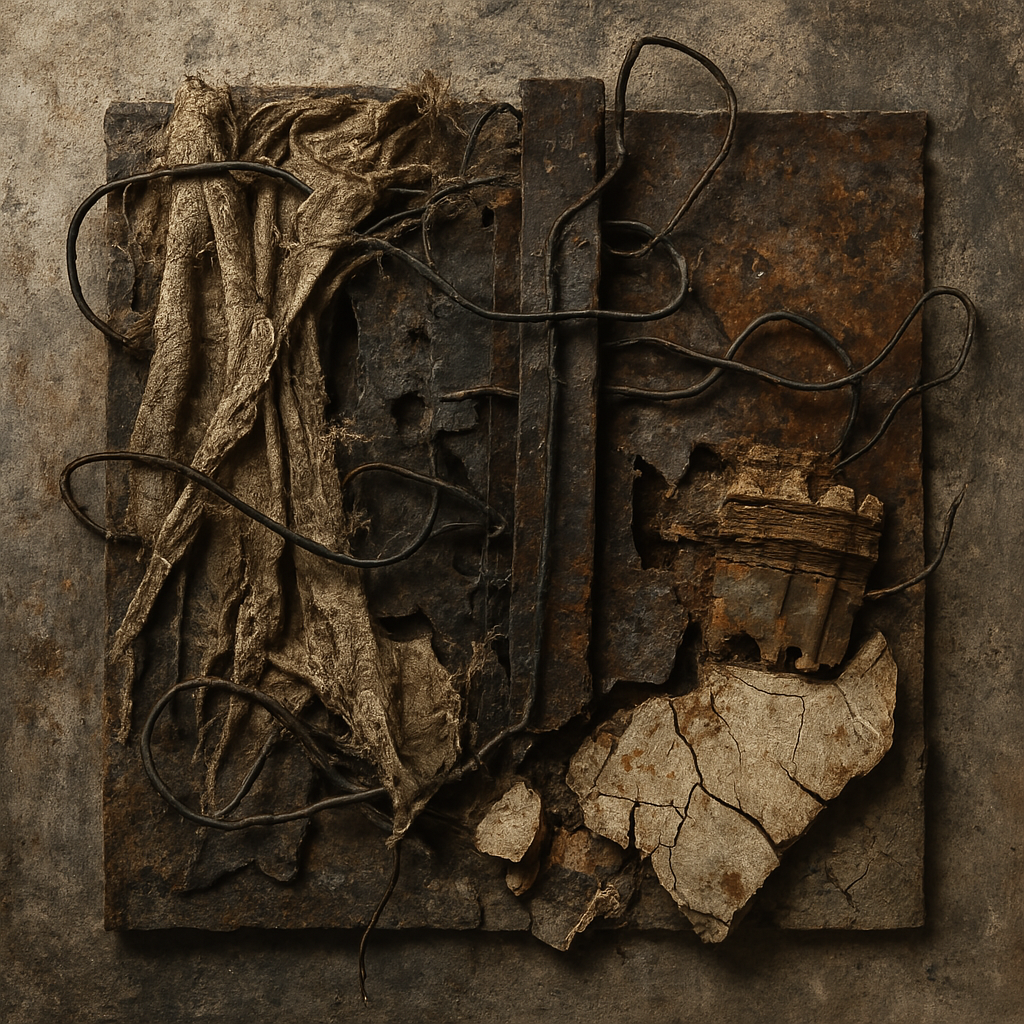
Phase I: Materializing Melancholy
The first act is elegiac. The prompt calls for rusted metal, bent wires, fractured ceramics, distressed cloth. Not as objects, but as residues of an unnamed system in decline.
We do not draw—we corrode. We do not compose—we collapse.
Generative Instruction:
Translate the underlying emotional, structural, or conceptual logic of the input text into a non-symbolic, mixed-media visual assemblage.
Use rusted metal, bent wires, fractured ceramics, distressed cloth, and corroded surfaces. Avoid any literal representations or recognizable symbols.
The result should feel like a physical manifestation of the input’s embedded meaning—interpreted through tension, fragmentation, layering, and texture.
What emerges is a relic of something proud, now unsustainable. An empire rendered into oxidation and collapse.
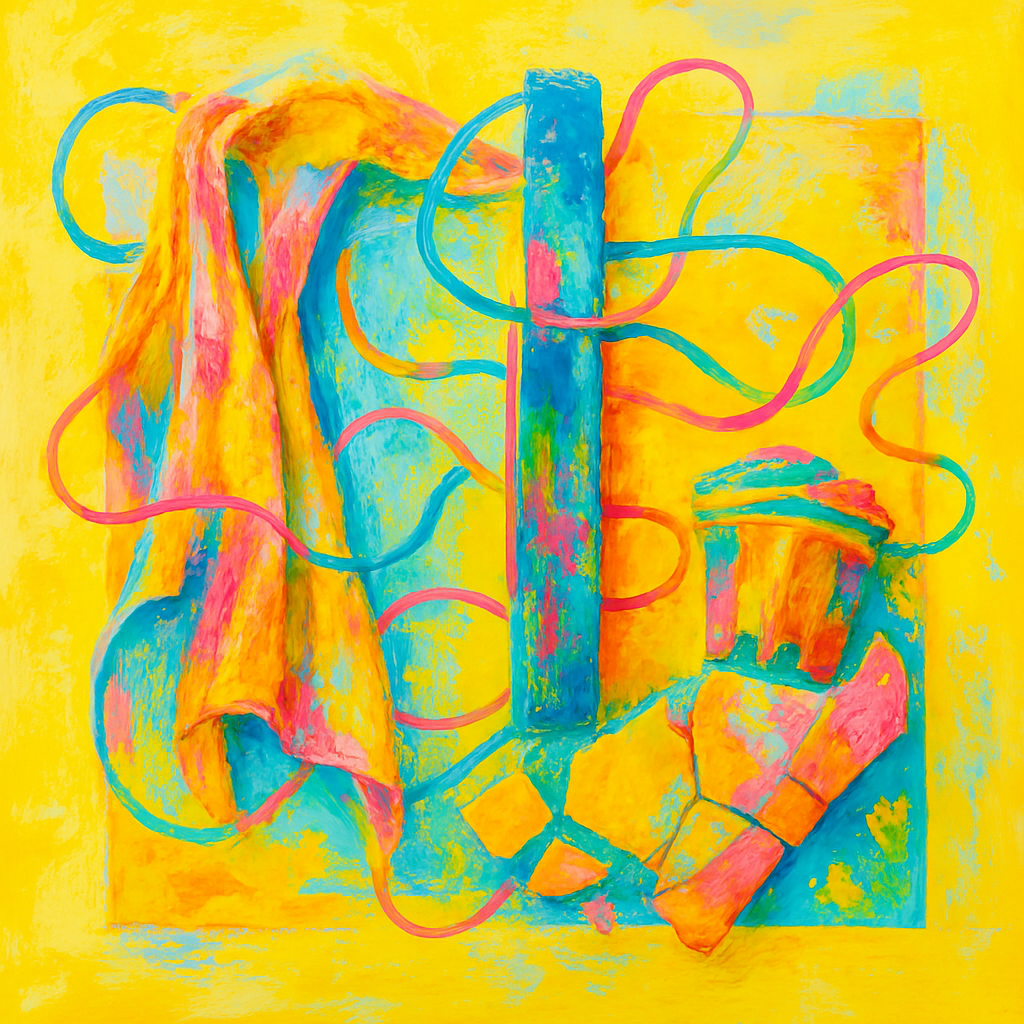
Phase II: Emergence Into Joy
The second act does not erase the past, but transforms it. Melancholy becomes energy. The debris of pride is alchemized into movement, wonder, and color.
The visual language remains dense, but the tone pulses with renewal—like sunlight refracted through stained glass.
Generative Instruction:
Transform its emotional tone from dark, melancholic, or depressive to bright, joyful, and dopamine-charged—like a mind alive with inspiration and creative momentum.
Maintain the original’s level of detail, surrealism, symbolism, and thematic complexity, but reinterpret each element through a lens of wonder, playfulness, or electric clarity.
The chaos dances. Structures loosen. Chromatic vitality floods the framework—rigidity gives way to play.
This is not redemption. It is reinvention.
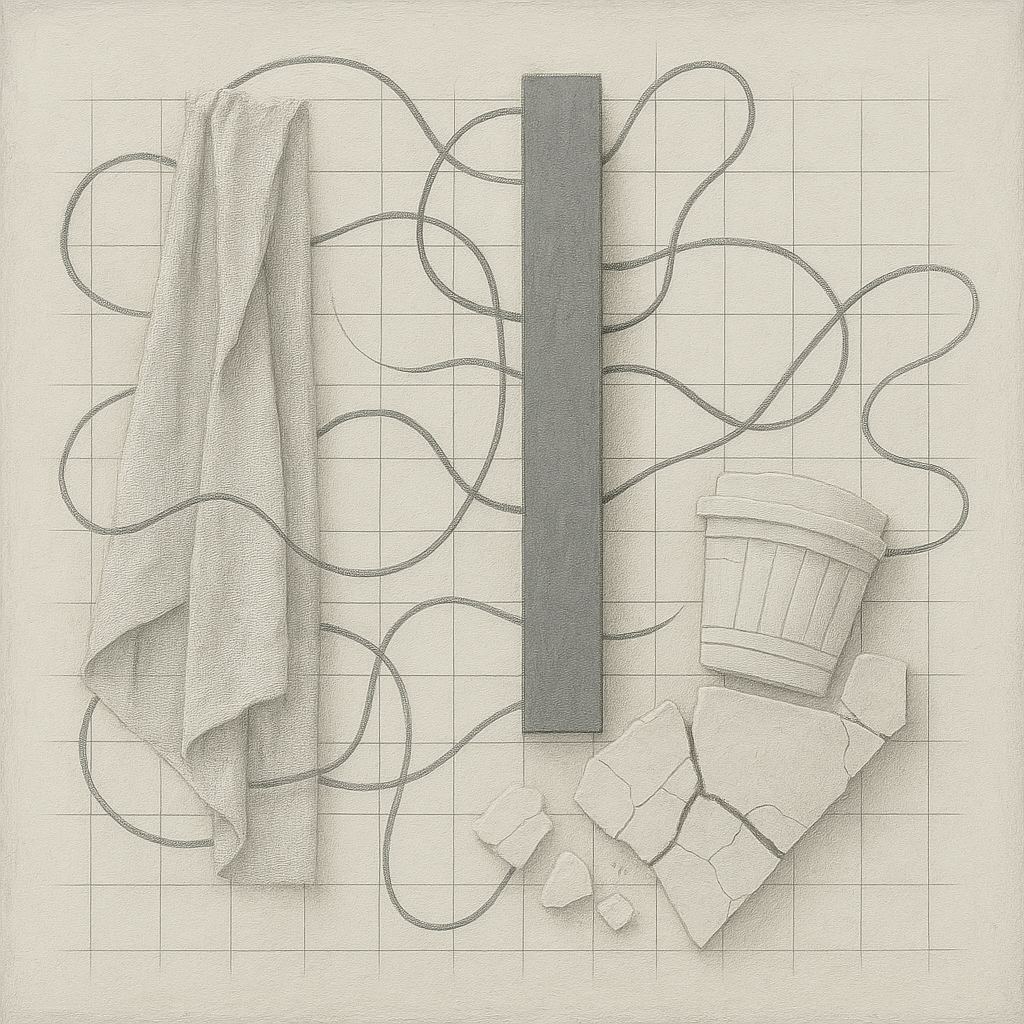
Phase III: Emotional Systematization
The final transformation tightens. What once moved now is filed. Emotion is processed. Systems take over.
Bureaucracy becomes aesthetic: a cold beauty of structure, hierarchy, repetition.
Generative Instruction:
Transform its emotional tone from dark, melancholic, or depressive into cold, procedural, and bureaucratic—like a system thinking for itself.
Maintain the original’s level of detail, surrealism, symbolism, and thematic complexity, but reinterpret each element through a lens of control, repetition, classification, and institutional logic.
The final work is not a collapse, nor a celebration. It is an archive. A cabinet of visual affect, flattened and categorized.
A painting that thinks in forms, not feelings.