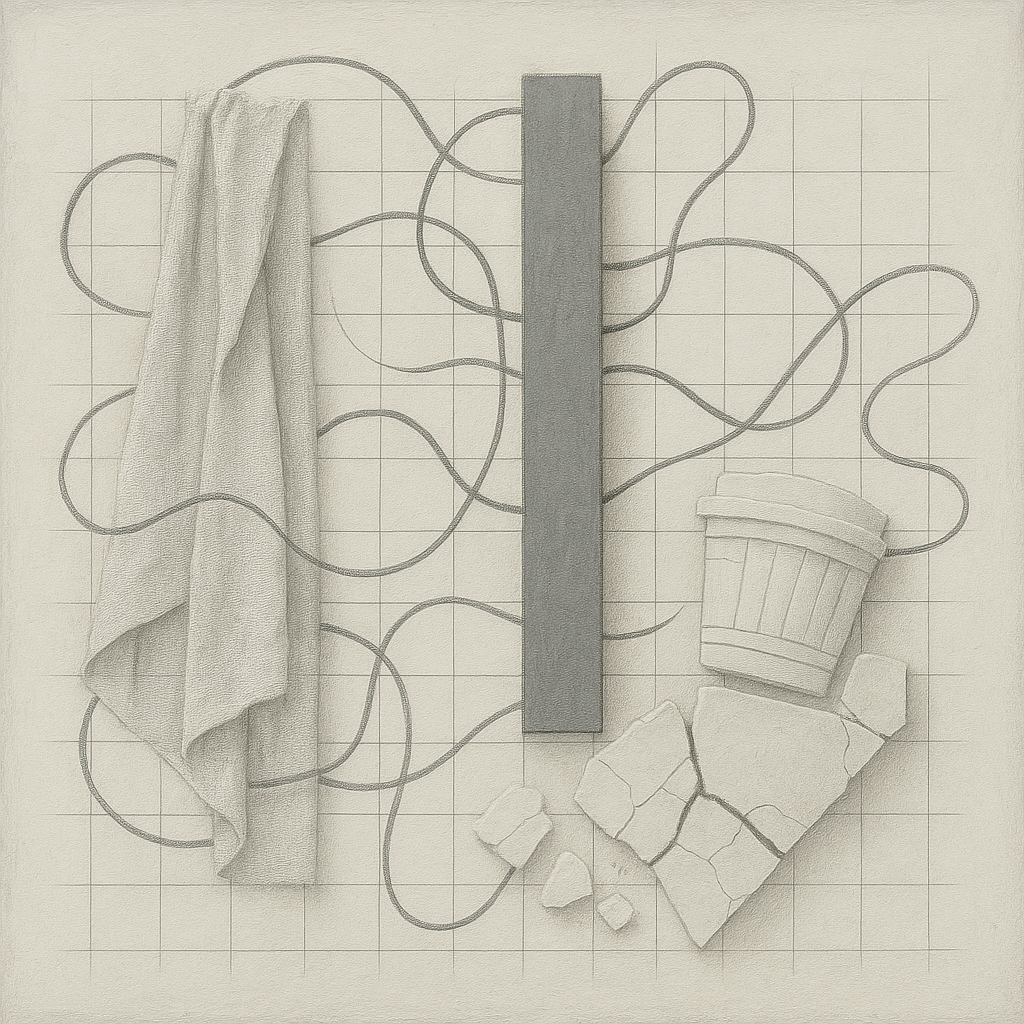
Initial Prompt
This process begins with a single evocative sentence:
The man who clung most tightly to imperial pride may have been its undertaker without knowing it.
This sentence was chosen for its emotional complexity and internal contradiction—expressing pride, decay, and irony.
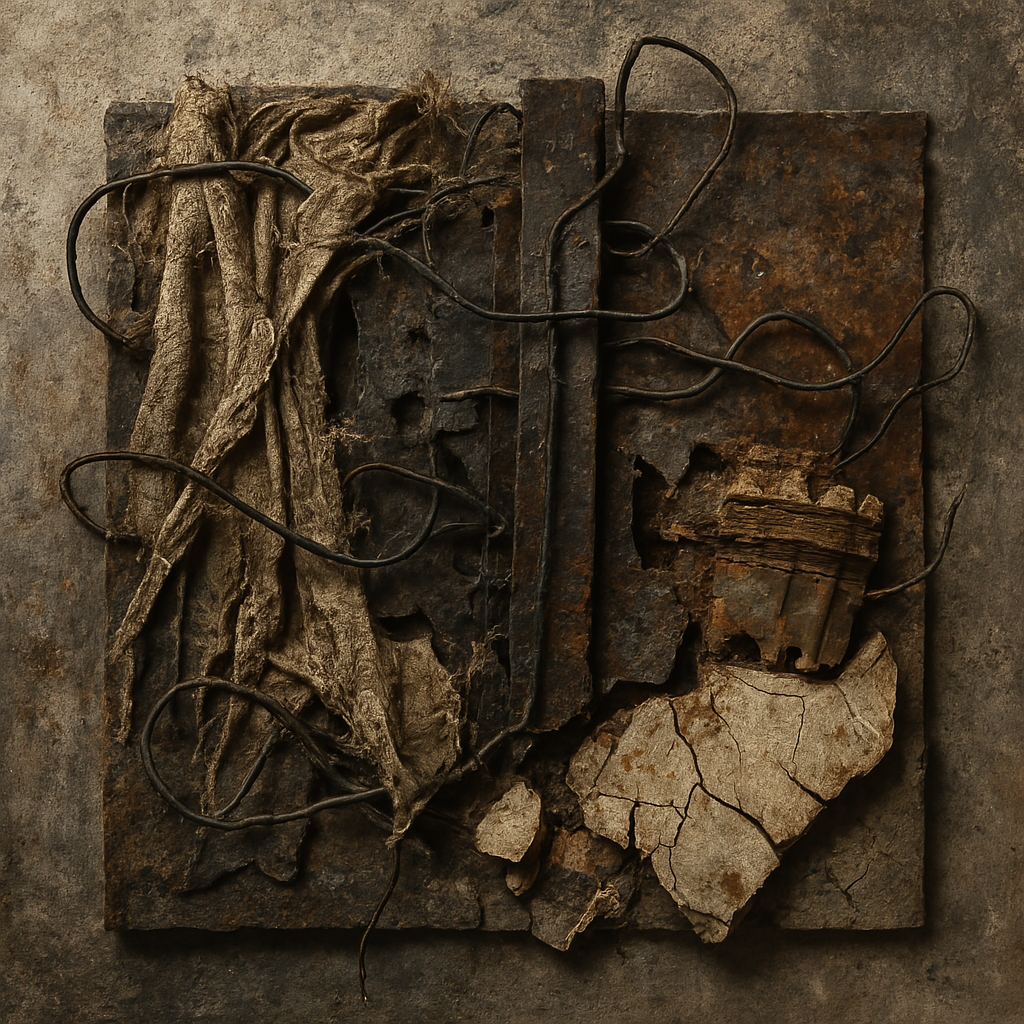
Step 1: Emotive Translation into Industrial Form
Prompt Used:
Translate the underlying emotional, structural, or conceptual logic of the input text into a non-symbolic, mixed-media visual assemblage.
Use materials like rusted metal, bent wires, fractured ceramics, distressed cloth, and corroded surfaces.
Avoid any literal representations or recognizable symbols.
The result should feel like a physical manifestation of the input’s embedded meaning—interpreted through tension, fragmentation, layering, and texture.
Result: The image below interprets the prideful collapse of empire as a distressed industrial relic—fractured and corroded but still structured, like a memory preserved in rust.
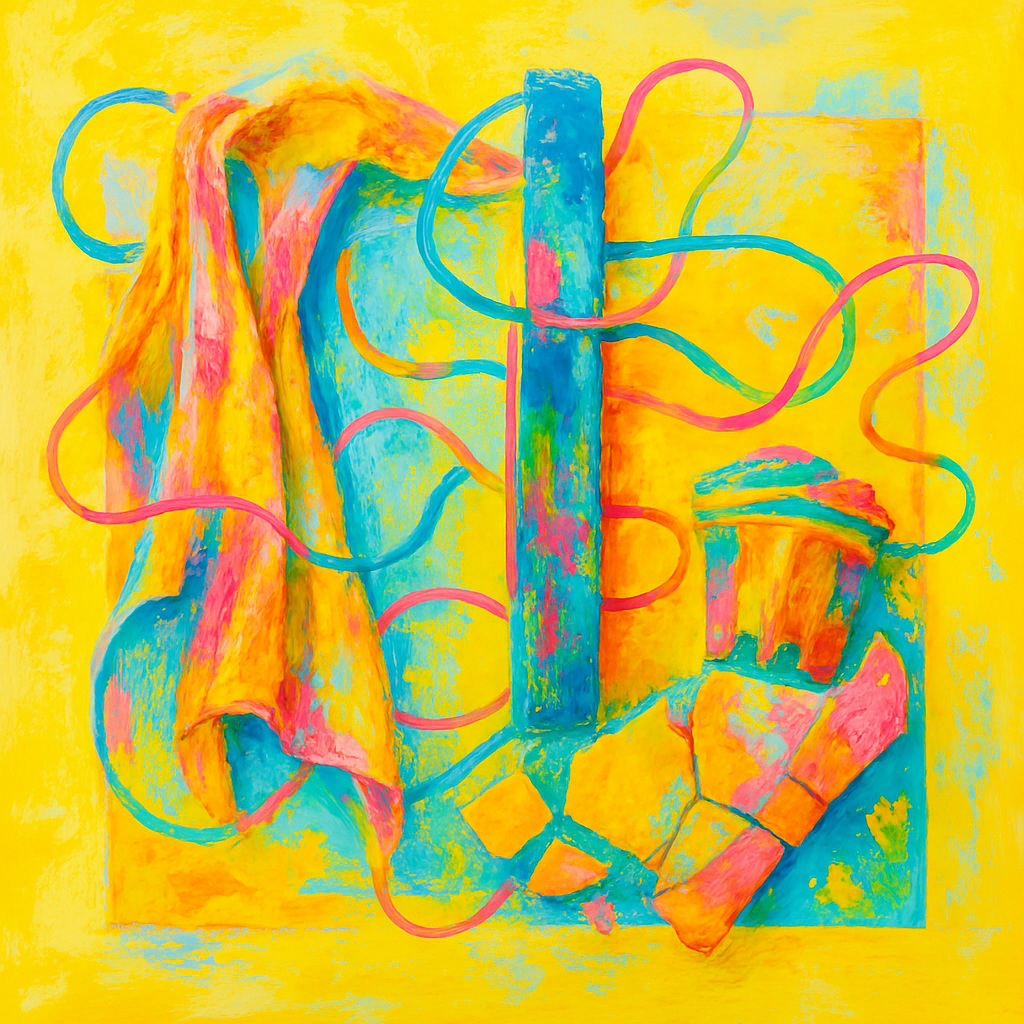
Step 2: Melancholy to Joyful Transformation
Prompt Used:
Transform its emotional tone from dark, melancholic, or depressive to bright, joyful, and dopamine-charged—like a mind alive with inspiration and creative momentum.
Maintain the original’s level of detail, surrealism, symbolism, and thematic complexity,
but reinterpret each element through a lens of wonder, playfulness, or electric clarity.
Result: The next piece translates the same structural logic into an exuberant display of color and motion. The elements once decaying now vibrate with life, movement, and creative potential.
Step 3: Joyful Energy into Bureaucratic Structure
Prompt Used:
Transform its emotional tone from dark, melancholic, or depressive into cold, procedural, and bureaucratic—like a system thinking for itself.
Maintain the original’s level of detail, surrealism, symbolism, and thematic complexity,
but reinterpret each element through a lens of control, repetition, classification, and institutional logic.
Result: Finally, the vibrant chaos is distilled into a visual system. Colors mute, shapes fall into alignment, and emotion gives way to structure.
The composition becomes an artifact of protocol—a diagram of affect processed and filed.